





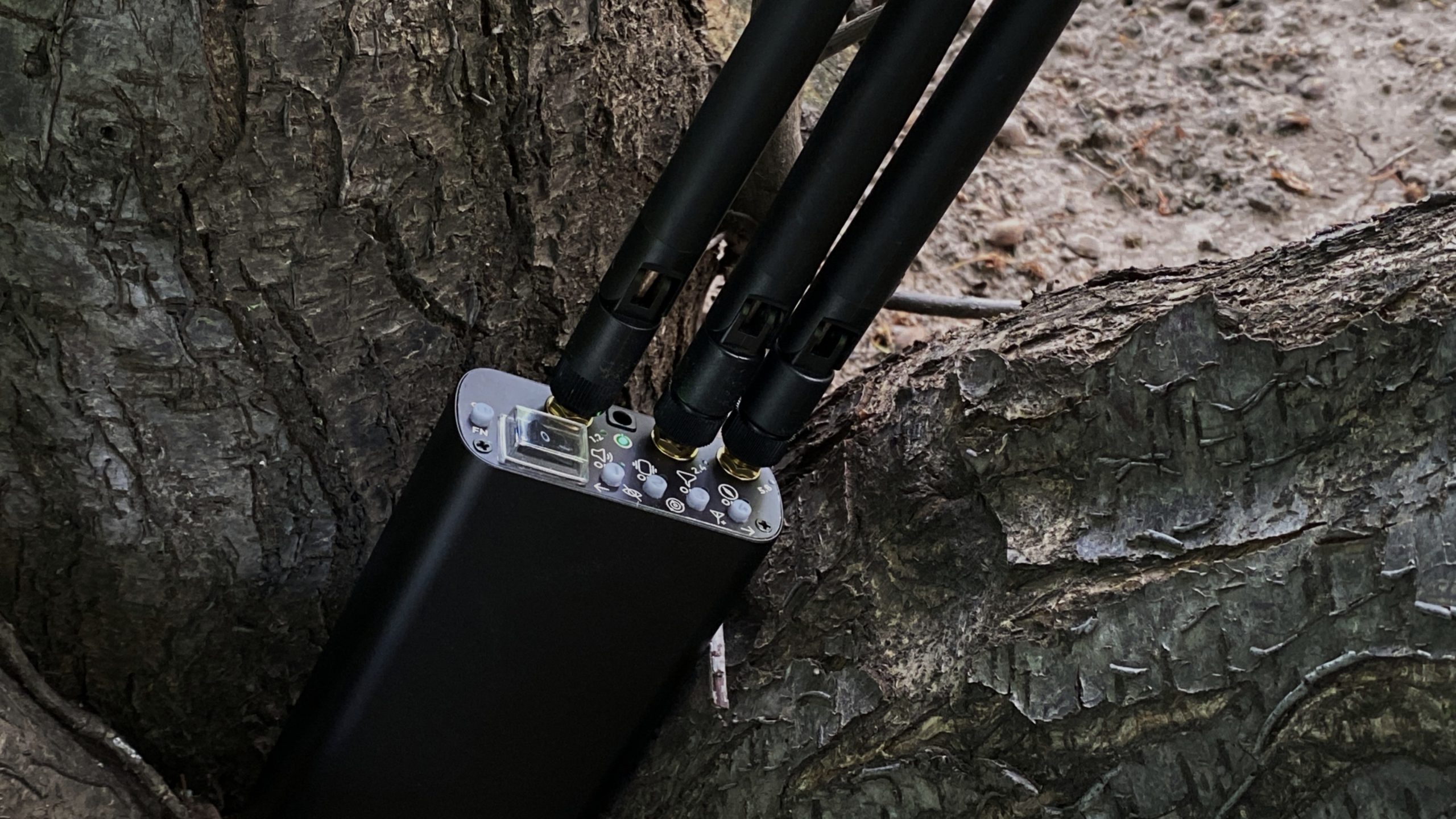
FPV drones are widely regarded as the main weapon in the Russian–Ukrainian war, with FPV strikes accounting for 70–80% of destroyed armored vehicles. Beyond armored vehicles, enemy FPVs regularly target individual soldiers. When they fail to find military targets, russians attack civilians to provoke fear.
Choosing a reliable drone detector is mission-critical, especially when it comes to protecting human life. Recently, dozens of detectors have come to market, competing on claimed detection range, TikTok view counts and the political figures backing them.
While these devices may look similar at first glance, the difference in quality between them is enormous. How do you choose a device that can help you survive?
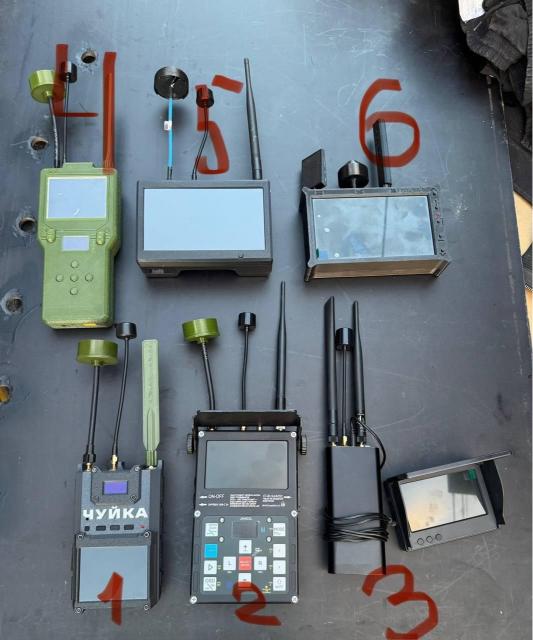
Below are 10 key factors to consider when choosing a drone detector, grounded in real-world operational threats and technical details. The article organizes the main technical aspects of detection, making it easier to optimize your choice.
The full version is intended for enthusiasts, EW and SIGINT unit commanders, signal operators, FPV crews, charity foundations, and procurement officers. A shortened version (just the criteria) can be read here.
What Do FPV and Mavic Drones Transmit That Can Be Detected?
FPV- and Mavic-type drones receive control signals from the operator and transmit video feedback to them. In the case of Mavic drones, they also send telemetry data, including coordinates, altitude, speed, battery level, and other relevant information. FPV drones, however, usually do not transmit telemetry, as experienced pilots intentionally disable it to reduce the number of active channels and lower the chances of detection.
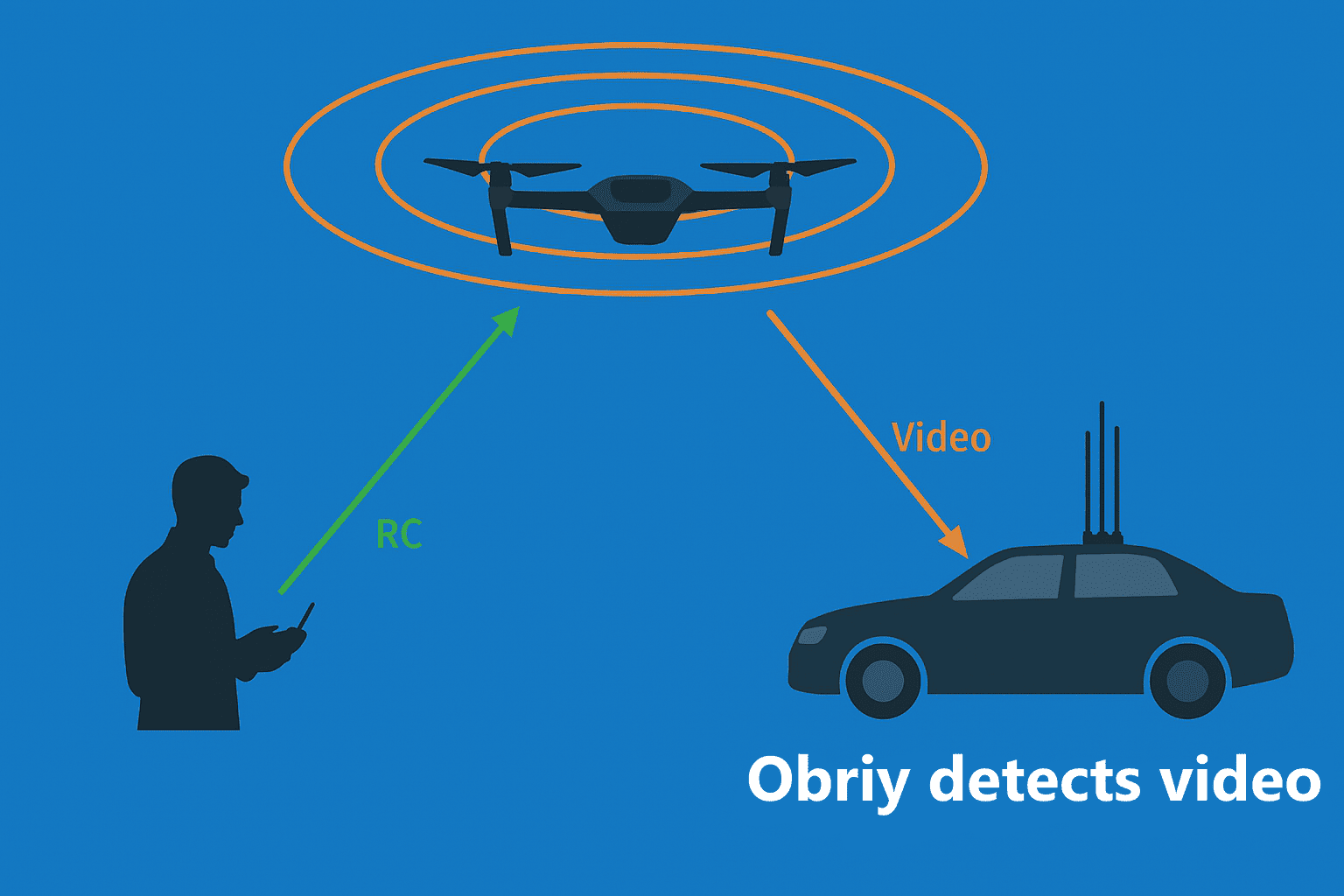
Therefore, FPVs can only be reliably detected via their video signal (by its strength or its scan pattern). Detectors that can process these parameters have a much higher chance of spotting an FPV target in time.
For the technically inclined — FPV video signal specs:
In FPV drones, the video from the camera is output in NTSC or PAL format, then modulated using FM (frequency modulation). This signal is transmitted in analog form within a frequency range of roughly 1 to 6.1 GHz, depending on the video transmitter in use. In theory, the range could be wider — from 0.4 to 6.5 GHz — but the extreme ends are rarely used in practice.
Lower frequencies (below 1 GHz) require large antennas, which are impractical for drones. Higher frequencies (above 6 GHz) require expensive equipment and have a shorter range at the same transmitter power because of greater signal loss in the air.
As a result, most remotely operated drones transmit within the 1–6.1 GHz range, and an effective detector must be able to cover this spectrum.
What Detection Methods Exist?
A detection method is the specific way a detector identifies a potential threat. This is one of the key criteria for any detector, as it determines whether the device will alert you to danger.
“They’re all basically the same.” (No, they’re not.)
Despite having a similar appearance and giving the impression of being identical, detectors differ greatly. Each is built differently: they use different components, have different specifications, unique features, and employ distinct signal-processing methods to detect drones.
There are four methods for detecting drones: by the overall signal level in the environment (RSSI), by video signal (scan analysis), by telemetry, and by control signal (from the remote to the drone). Since FPV drones typically do not transmit telemetry, the focus is on the remaining three:
1. Video-Signal Detection by Signal Strength (RSSI)
RSSI (Received Signal Strength Indicator) is a measure of the power of a received signal — essentially, just the signal strength within a certain frequency range.
How it works:
Radio frequencies are scanned one by one, checking for signals whose strength exceeds a set threshold.
Advantages:
- Can detect both digital and encrypted video, not just analog (NTSC, PAL).
- Allows you to see activity within a given frequency range.
Disadvantages:
- Cannot distinguish between signal types (Wi-Fi, Bluetooth, EW interference, and drone signals are all treated the same).
- Cannot work in “sensitivity dead zones” (frequency areas where reception is poor).
- Dependent on hardware quality (without proper calibration, blind spots will occur).
- Weak signals below the set threshold may be missed.
Bottom line:
Relying solely on RSSI detection is not enough, but it can be useful in combination with other detection systems as an additional indicator.
2. Video Signal Detection by Scan Pattern
Since this article focuses on detecting FPV- and Mavic-type drones, video-signal detection becomes a crucial factor. These drones transmit live video continuously while in the air — meaning for as long as they remain a threat. The main operating frequency bands are 1.2 GHz, 2.4 GHz, 3.3 GHz, and 5.8 GHz, covering FPV, DJI, Autel, and similar drone systems.
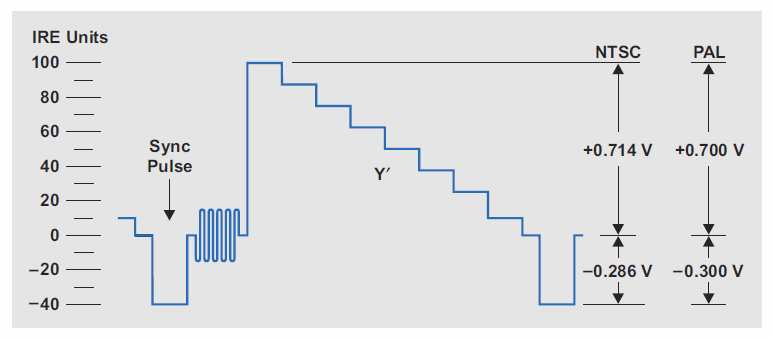
The quality of video detection — meaning how weak a video signal the device can register (without false alarms) — depends on how the system recognizes the video scan pattern. An analog FPV signal (NTSC or PAL) has a distinctive trait: line and frame scanning. When a drone transmits real-time video, the signal has a unique structure that can be recognized not only by its frequency, but also by the specific pattern formed during image transmission. Detectors can analyze this structure – either a frame scan or a line scan.
- Frame Scan:
The process of splitting a video into individual frames, which are then sent as a sequence of pulses for transmission or processing. A frame sync pulse marks the end of one frame and the start of the next. While the video is active, this pulse is transmitted continuously at a frequency of 50 or 60 Hz. A detector can recognize this as a pattern unique to video signals. - Line Scan:
The process of sending a frame is gradual, line by line, from top to bottom. Each video line has its line-sync pulse, transmitted at a much higher frequency — 15.6 kHz.
Even if the video is weak, distorted, or partially overlapped by another signal, the sync pulse rhythm remains, and a detector can lock onto it.
Which Sync Pulses Should a Detector Rely On?
| Parameter | Frame sync (Vertical) | Line sync (Horizontal) |
| Signal frequency | ~50 or 60 Hz | ~15.6 kHz |
| Probability of missing the signal | High, because pulses are infrequent | Low, because the signal is much more frequent |
| Detection time | From 150 ms to check a single frequency – slow, as the signal is formed only once per frame and several pulses need to be captured | Up to 0.2 ms – fast, since tens of thousands of lines are transmitted each second. If video is present on the frequency, horizontal sync pulses will be detected quite quickly |
Line scan is the better choice for detection, as it finds drones faster than frame scan. On the front line, this speed is critical — even a single second can decide whether you have time to react to an incoming drone.
Advantages:
- It can work even under EW (electronic warfare) interference, where RSSI-based detection fails.
Disadvantages:
- Cannot detect digital or encrypted (e.g., scrambled) video signals.
How Are Video and RSSI Related — and Where’s the Problem?
If poorly implemented, some devices only analyze for video where they first detect a signal above a certain RSSI threshold. This means that if the video signal is below that threshold, it won’t even be checked. In practice, a weak signal (e.g., from a distant or obstructed source) may still contain a clear scan pattern (sync pulses), but if RSSI is low, the device will ignore it.
Since almost no detectors have calibrated RSSI, drone signals that fall into an RF “response dip” won’t even be tested for video in such devices.
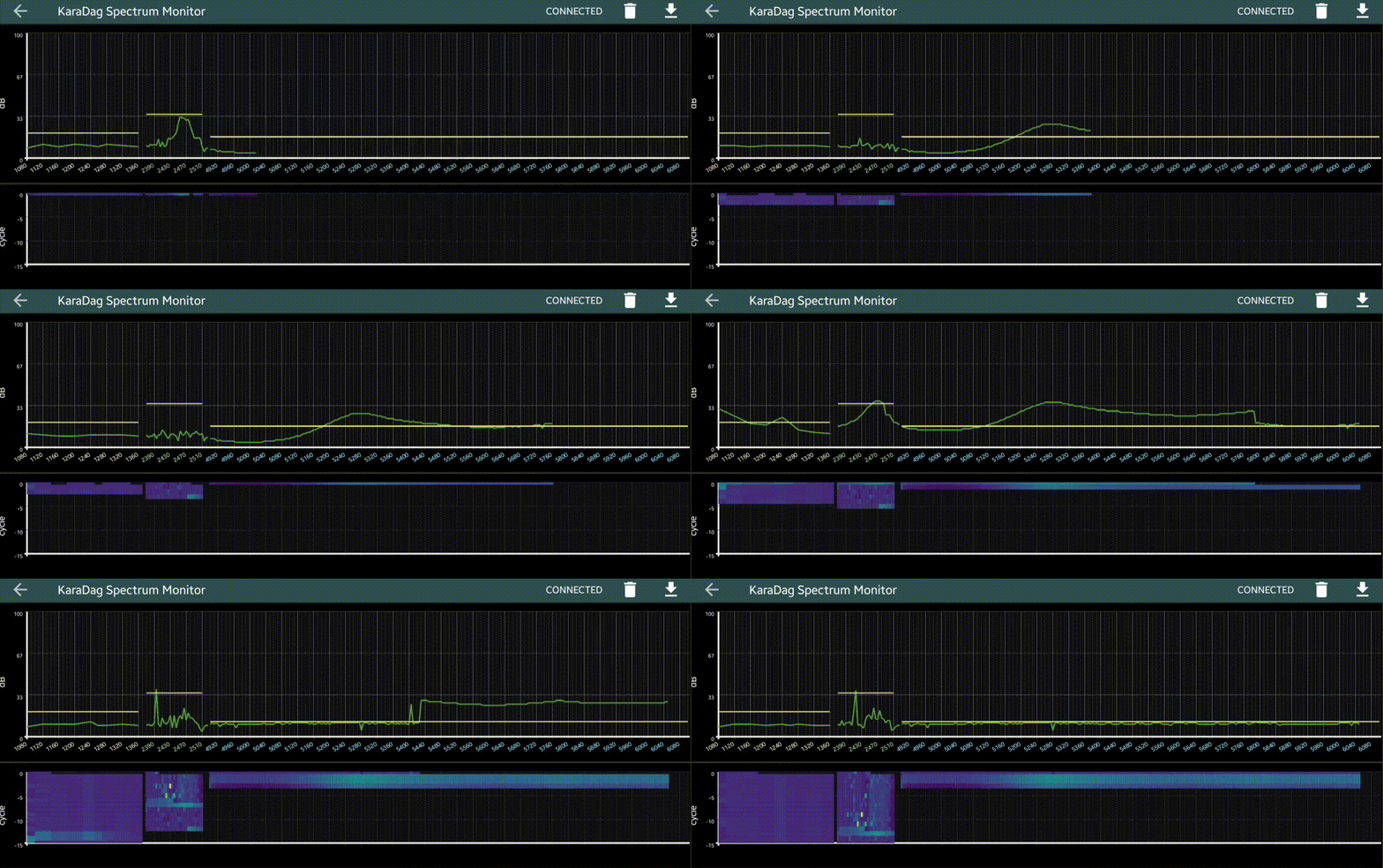
3. Detection by Control signal (Remote Controller) Search
If a detector is designed to search for remote-control signals in the 400–1000 MHz range, it is not useful. The reasons are simple, and there are several of them:
- We need to detect the drone, not the remote controller.
Just because the drone can see the remote controller (thanks to its altitude, antennas, and frequency-hopping key) doesn’t mean we — positioned lower to the ground — will be able to detect it. - The airspace is full of remote controllers.
On the front line, there can be dozens of controllers transmitting at once. We’ll often detect our own with stronger signal power rather than the enemy ones. - Even if the remote controller is enemy-operated, we don’t know where the drone is headed.
In short, looking for the operator instead of the drone simply doesn’t make sense.
Video Detection System Requirements
To summarize, a reliable drone detector must address several key factors to effectively detect drones:
- Detect the drone’s signal, not the remote controller.
The detector should operate at the frequencies drones use to transmit video — typically the 1.2, 2.4, 3.3, and 5.8 GHz bands. - Be capable of detecting digital video.
Without this, the detector will miss Mavic drones and FPVs with digital video links. - Include calibration when using digital video detection or RSSI-based detection.
Calibration is necessary to adapt the device to specific conditions (antennas, placement, and the local electronic environment). - Analyze analog video on every frequency step (for example, every 5 MHz), regardless of RSSI levels.
Detection should be based on a line scan, not a frame scan. - Recognize inverted video signals.
FPV operators often use video inversion to bypass standard detection tools when targeting high-value assets. - Prioritize sensitivity.
This is a key parameter that determines the distance/range the detector can pick up a drone’s signal. A device with insufficient sensitivity will fail to trigger in time — especially if the drone is flying low, fast, or between obstacles. A good detector should register a signal before the drone reaches a dangerous distance, leaving enough time to react. Sensitivity and reaction speed are discussed in more detail in the section “Main Detector Specifications.”
Main Specifications for a Drone Detector
Choosing the optimal drone detector requires a comprehensive approach, as the effectiveness of the device is determined by a combination of technical parameters. Below are the key specifications that influence detection quality. Each criteria plays a decisive role in ensuring a timely response to threats.
1. Sensitivity
RF sensitivity of the receiver module is the key parameter that determines a detector’s ability to pick up extremely weak signals.
Signal strength, like sensitivity, is measured in dBm. The weaker the signal, the lower (more negative) its dBm value. In practice, signal levels are so low that the dBm reading is usually negative. The better the sensitivity, the weaker the signals the detector can register (for example, –90 dBm is considered quite good sensitivity).
Approximate effect of sensitivity on detection range:
| Rx sensitivity (dBm) | Range (km) at 1.2 GHz | Range (km) at 2.4 GHz | Range (km) at 5.8 GHz |
| -70 | 0.84 km | 0.42 km | 0.17 km |
| -80 | 2.65 km | 1.32 km | 0.52 km |
| -90 | 8.37 km | 4.18 km | 1.66 km |
| -100 | 26.48 km | 13.26 km | 5.26 km |
| -110 | 83.72 km | 41.76 km | 16.64 km |
Calculation parameters:
- Frequency bands: 1.2 GHz, 2.4 GHz, 5.8 GHz
- Transmitter power: VTX 2 W
- Link type: Line of Sight (LoS)
- Antennas: Omnidirectional
This is an idealized model. In real-world conditions, range is reduced by obstacles, weather, drone orientation, RF noise, and other losses.
Factors affecting sensitivity:
1.1 Receiver module — the main element determining baseline sensitivity.
For example, the CC2500 chip found in some low-cost detectors only supports 2.4 GHz, has limited sensitivity, and is unsuitable for detecting DJI drones or FPVs.
1.2 On-board Low Noise Amplifier (LNA) — boosts weak signals, but without a high-quality receiver, it’s not a complete solution, as it also amplifies noise and interference. Proper RF design and filtering are essential to reject unwanted signals.
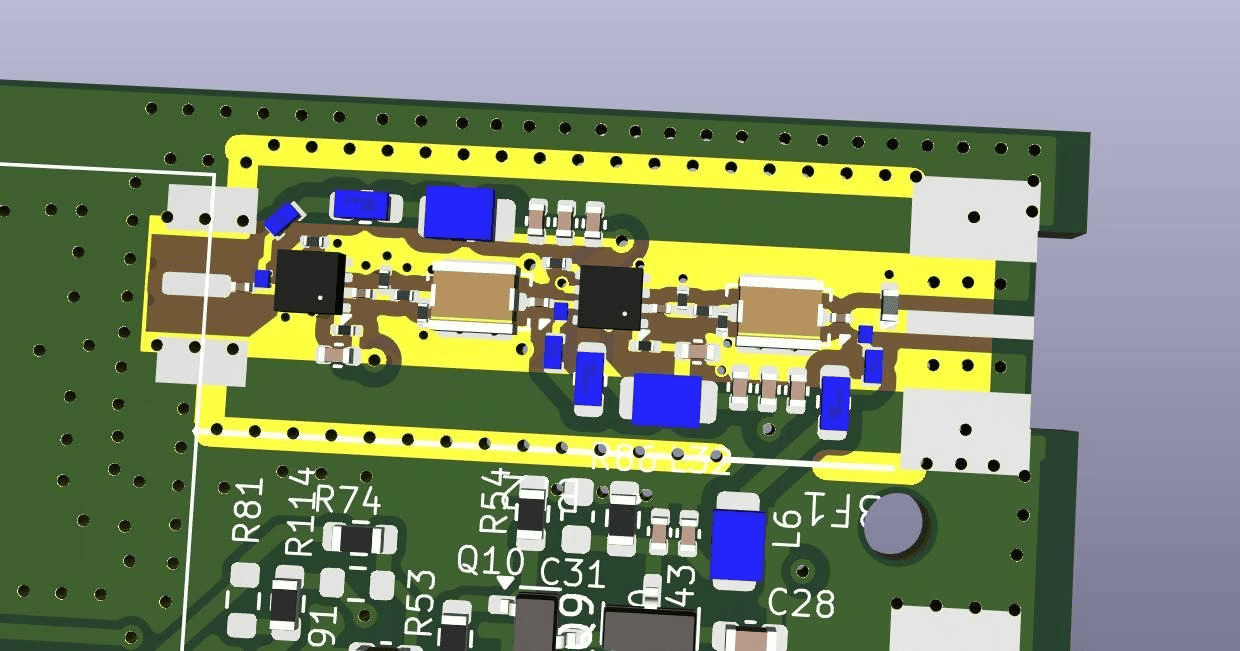
1.3 Antennas: directionality, SWR (Standing Wave Ratio), polarization type.
- If a detector uses only an RHCP antenna but the drone transmits LHCP, the signal will be attenuated. A proper setup should include antennas for both polarizations, or at least a vertical/diagonal polarization antenna that can receive RHCP and LHCP equally well.
- Many devices omit antenna specifications or fail to measure them in situ — antennas must be tested on the device, not separately.
- SWR shows how well the antenna is matched to the receiver’s impedance. A high SWR means part of the signal is reflected into the cable, resulting in losses before the receiver.
1.4 Video detection system — even with good RF sensitivity, a detector may fail to recognize a video signal if its algorithms aren’t optimized for weak or noisy inputs (see “Video Detection by Line Scan” above).
Common mistake:
Evaluating detection range based on user reviews or manufacturer claims is misleading — every situation is unique, and range varies across frequencies. It also depends on the drone transmitter power and other factors rarely disclosed.
Instead, assess the detector’s actual sensitivity to video signals along with the combined performance of: a sensitive receiver, a properly matched antenna, correct polarization, and a line-sync-based video detector that doesn’t rely solely on RSSI.
2. Scanning Speed
Sensitivity and detection speed should be considered together: sensitivity determines how far the device can “see,” while speed reflects how quickly it can notice a signal. Therefore, the detector’s response speed is just as important, as it determines how quickly the device identifies a drone once its signal appears in the airwaves.
Detectors scan radio frequencies either sequentially or in parallel, depending on their technical design. If the device cycles through frequencies slowly, several seconds may pass between the moment a signal appears and its detection — a delay that can be critical in combat conditions.
An FPV drone can cover 100 meters in 2–3 seconds, so even a short delay may prove decisive.
3. Frequency Range
A high-quality detector should cover the main video transmission frequencies: from 1000 to 6100 MHz (in theory, from 400 to 7000 MHz), which includes FPV, DJI, Autel, and other types of drones.
At the time of writing, the most common video ranges used by Russian drones correspond to available Chinese VTX modules and include:
- 1.2 GHz — Longest transmission range and good penetration through obstacles, but the lowest video quality due to noise. Used for long-range flights where distance and signal stability are the priorities.
- 2.4 GHz, 3.3 GHz — A balance between range and video quality, but more prone to interference from other devices due to band congestion, and with reduced penetration through obstacles. These ranges are typically chosen as a compromise between range and video quality. Digital FPV systems (DJI FPV, Walksnail Avatar HD) generally use 2.4 GHz, while 3.3 GHz is still almost exclusively for analog FPV video.
- 5.8 GHz — Provides high video quality but has a short transmission range and poor penetration through obstacles.
4. Absence of False Alarms
A detector must be capable of filtering out background signals that do not pose a potential threat, such as Wi-Fi, Bluetooth, or nearby electronic warfare (EW) activity. Filtering may be either automatic or manually adjustable, depending on the conditions in which the device operates. Without this feature, the detector will constantly respond to background signals, which significantly reduces its effectiveness in combat situations due to persistent false alarms.
Operating principle: Most detectors operate on the principle of radio-frequency scanning — they search for signals characteristic of FPV or Mavic drones. The problem is that the frequencies used by these drones often overlap with Wi-Fi, Bluetooth, and household devices, meaning that a signal at that frequency does not always indicate the presence of a drone.
To reduce the number of false alarms, a high-quality detector should:
- Be capable of analyzing the structure of the signal (e.g., bandwidth) rather than only its presence (by RSSI);
- Use signal filters to eliminate Wi-Fi packets, EW pulses, and short “spikes”;
- Include a video scan format recognition algorithm (NTSC/PAL) to distinguish actual FPV video from noise.
As already noted in the article, a device that relies solely on RSSI without additional algorithms (e.g., MDD — which triggers on any strong signal regardless of its nature) may miss a drone whose signal falls below the detection threshold, while still regularly producing false alerts from other nearby devices.
5. Presence of an External Antenna
If there is no direct line of sight to the drone, the detection range will be significantly reduced. A car roof or a single brick wall will cut the range by three times. Two walls or armor will make detection impossible.
That is why detectors mounted on vehicles, armored platforms, or inside shelters should only be used with an external antenna installed at a sufficient height to maintain a direct line of sight to drones, or at least without major obstructions.
The detector must have an external antenna that meets the following criteria:
- Matched to it by parameters (“foreign” antennas are not an option);
- Waterproof.
- The number of cables matches the number of antennas (combiners and diplexers are not an option, as they reduce sensitivity).
- Active (with an LNA amplifier), powered by the device — either via Bias-T or an internal supply.
- Cable length no more than 3–5 m (losses in a 10 m SLL240SF cable at 5.8 GHz will reduce the range by a factor of three times, the same as a single brick wall). For longer distances, it should be possible to move the receiver itself rather than just the antenna, eliminating cable loss between the antenna and the receiver.
The antenna is mounted on the car roof or a vehicle mount to ensure better radio visibility, with the signal transmitted via cable to the detector, which can be located inside the vehicle or nearby. This approach reduces losses caused by interference, walls, or the vehicle body that weaken the signal, and allows for interchangeable antennas with the required polarization, directivity, or bandwidth.
6. Analysis of Encrypted Video Signals
Naturally, there are also various methods of encrypting video signals:
- Signal inversion — the video is transmitted “inside-out,” with black becoming white, and so on.
- Scrambling — intentional distortion to protect against interception.
- Frequency shift or hopping from one to another, and others.
The minimum requirement for a detector is to register the very presence of a signal, while the ability to decrypt it is a nice bonus. A good detector should be able to identify a signal even in a non-standard form.
Additional Parameters
In addition to the main technical characteristics, supplementary features and design elements also play a crucial role in the operation of a detector. These parameters not only enhance the device’s effectiveness but also ensure its ease of use in different conditions. Each of these aspects affects the practical suitability of the detector, especially during long field use and for various operational tasks. Below are the key additional parameters to consider when selecting a device.
1. Battery life
Long operation on a single charge, fast charging speed, and universal power interfaces, such as USB-C, are important, as well as the ability to charge from other devices (e.g., car, power bank). This can be critical in field conditions.
2. Durability and environmental protection
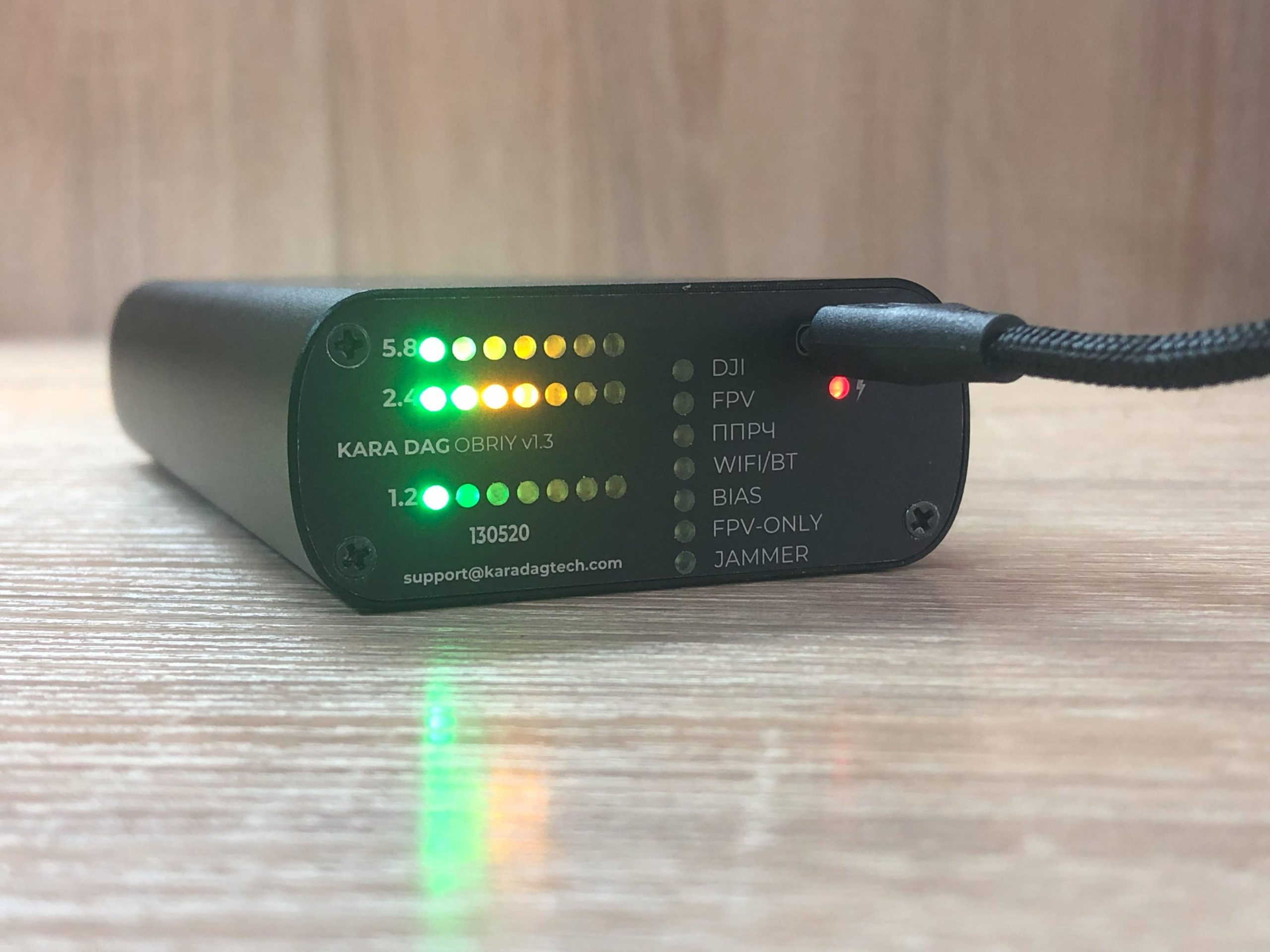
The detector must be resistant to dust, moisture, and impacts. Lack of protection will quickly lead to wear and breakdowns — especially in combat conditions. At a minimum, IP65 protection and a metal/rubber body with waterproof ports are required. There should also be protection against static and EW-induced surges on all ports (SMA, Type-C, etc.).
3. Parallel scanning and sweep speed across all detection frequencies
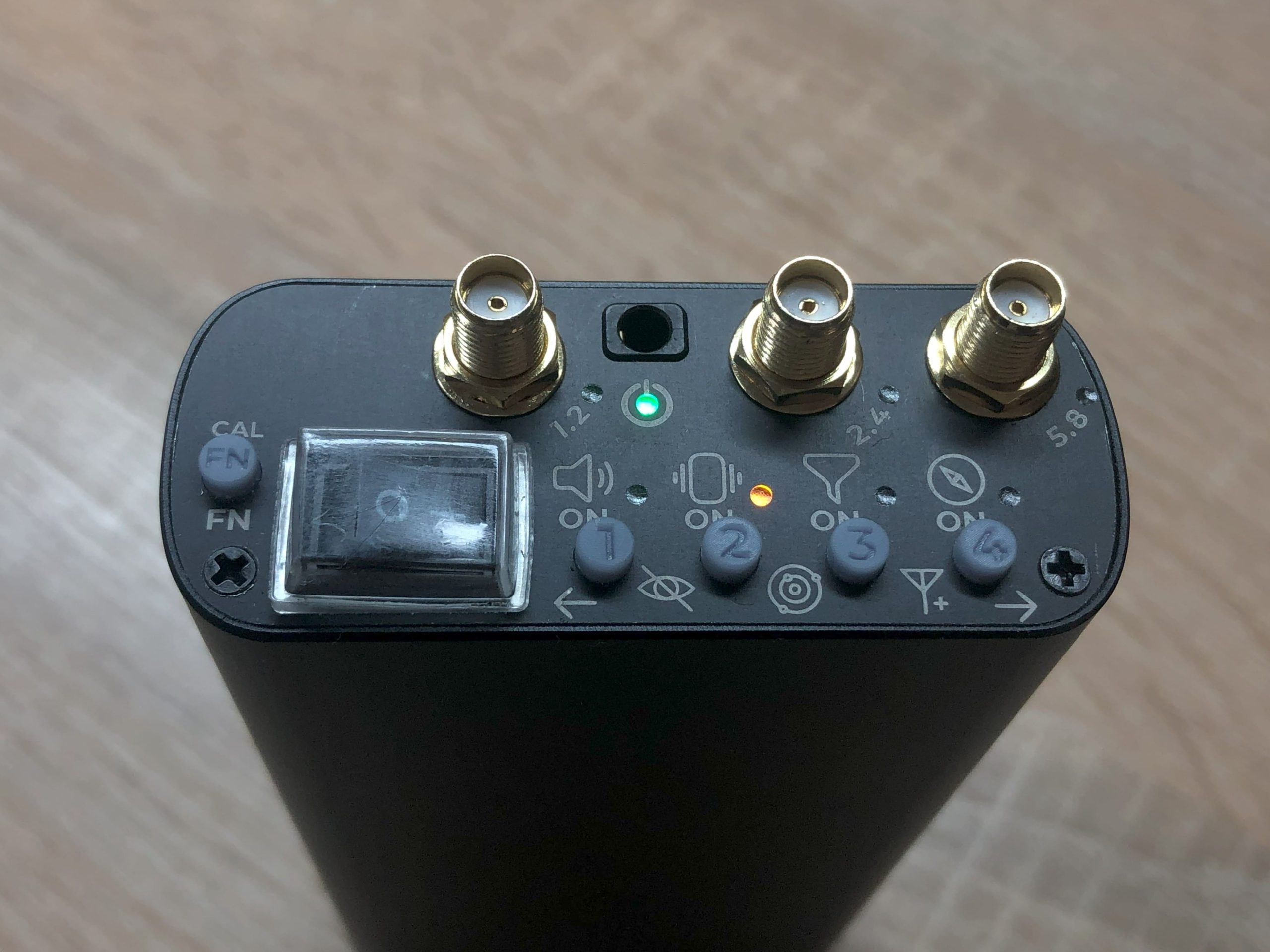
Parallel scanning means that the detector checks multiple frequency bands simultaneously. Sweep speed determines how quickly the detector scans the entire available frequency range and assesses the presence of a signal in each of them. For example, a 5-second sweep means the displayed radio spectrum is already 5 seconds outdated. These parameters influence each other and together define the real effectiveness of the detector.
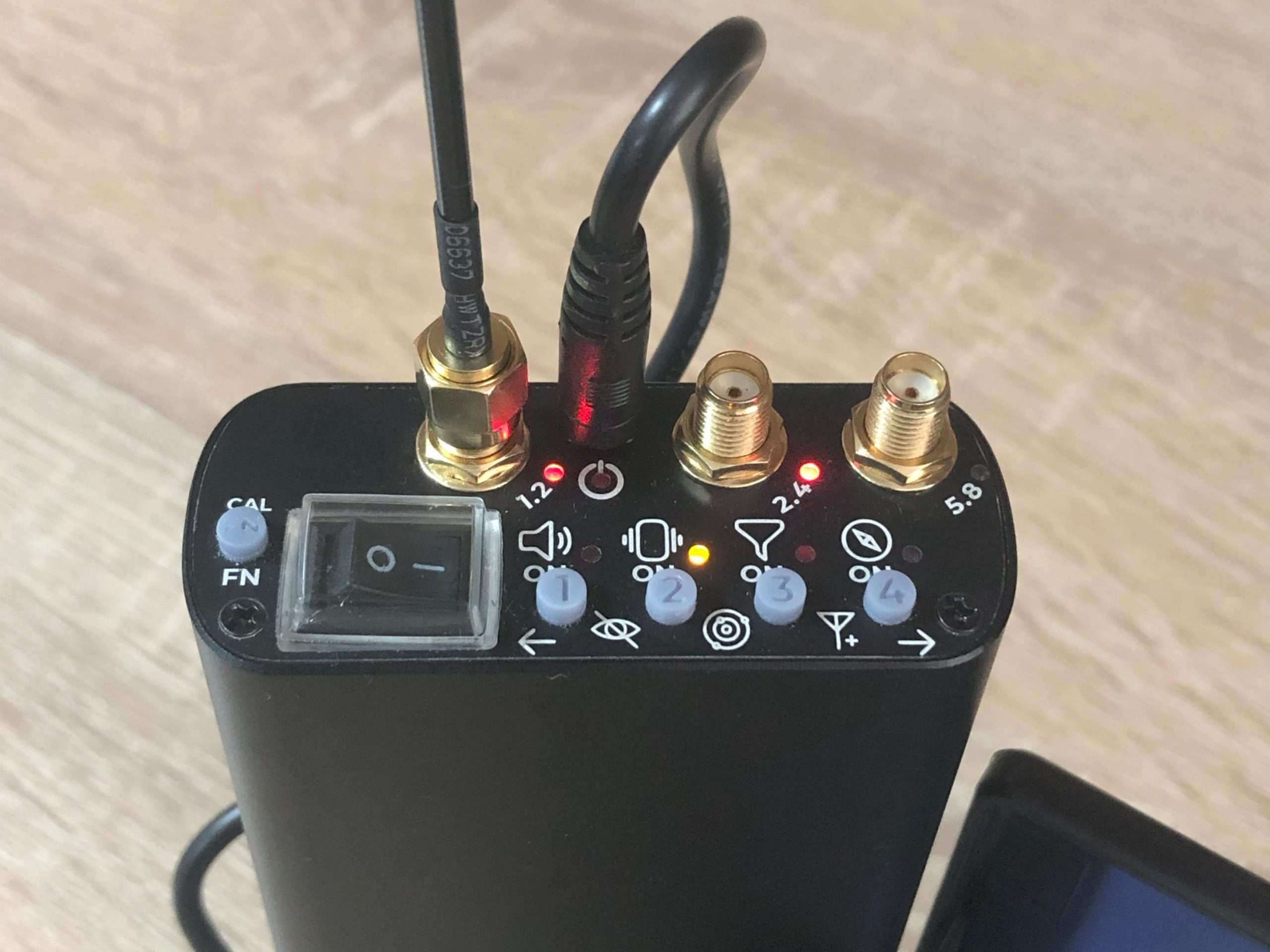
4. Direction finding
The ability to use directional antennas to determine the direction from which the drone is approaching.
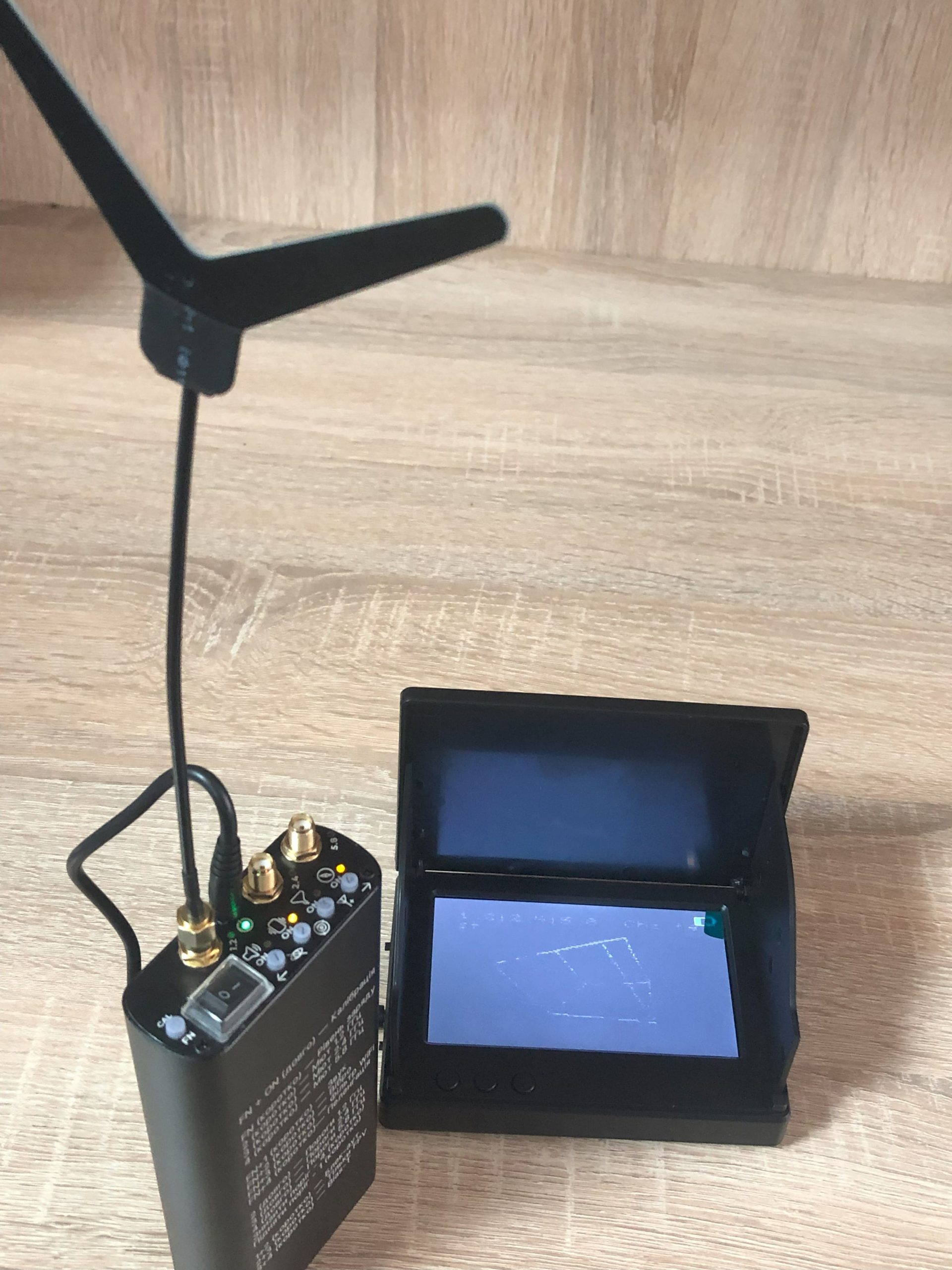
5. Integration with EW systems, smartphones, and PCs
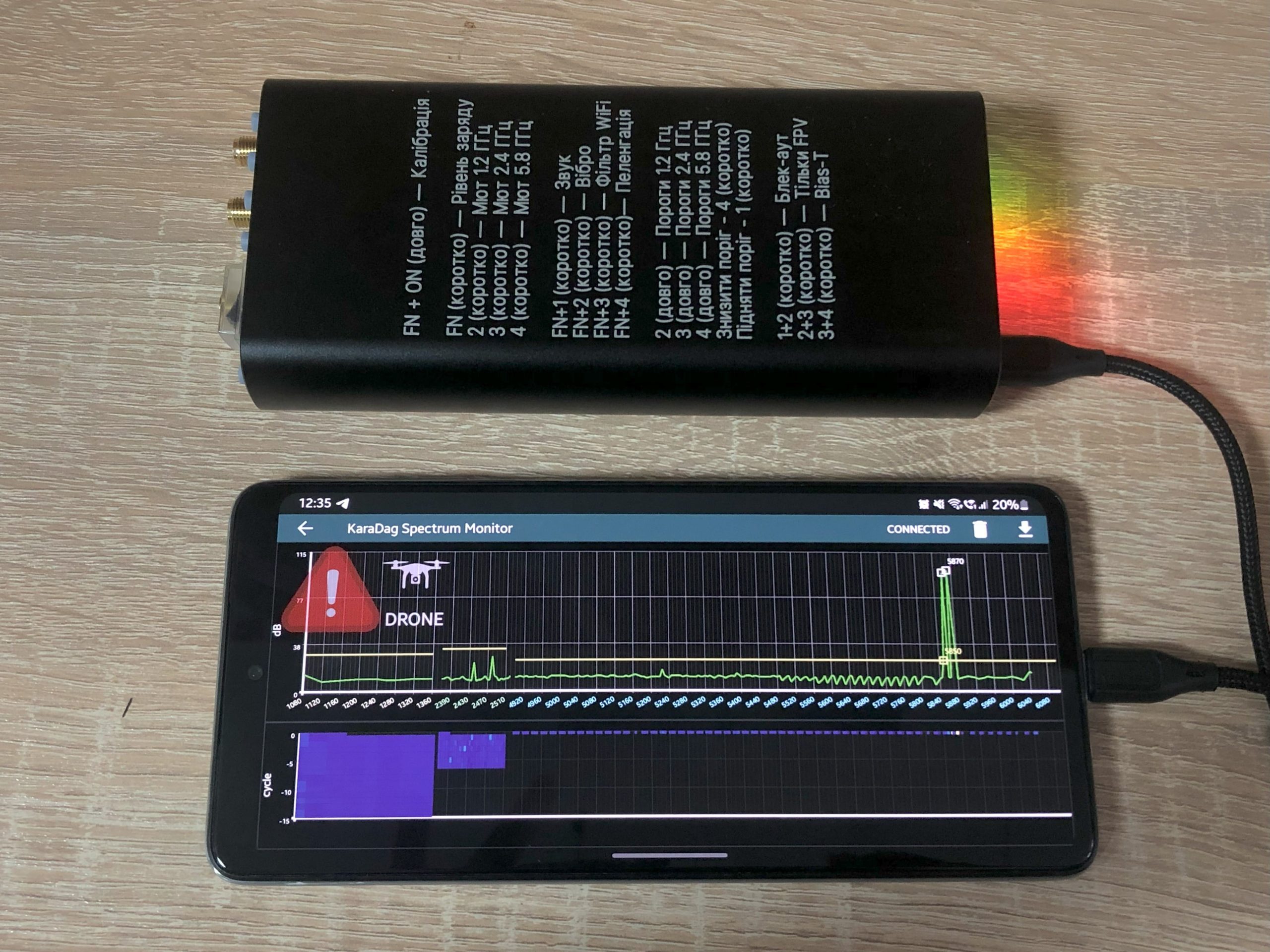
Support for connecting to an EW complex, computer, or smartphone makes the detector far more convenient and functional. It allows for real-time radio spectrum monitoring, more precise tuning, log storage or transmission, firmware updates, and output of video or detection data for joint analysis.
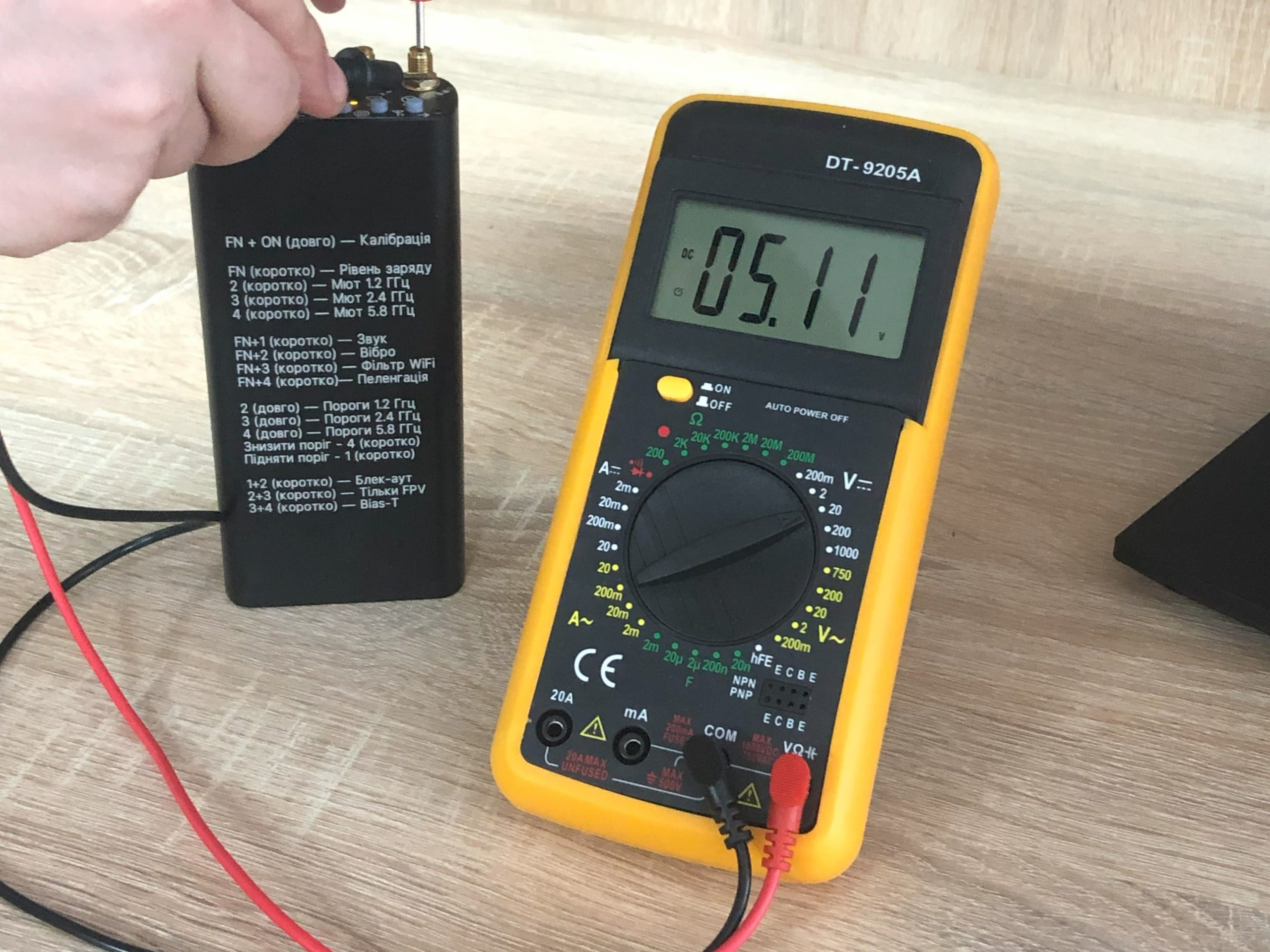
6. Antenna power supply
To conveniently supply power to an amplifier, a Bias-T is used — a special component that enables power delivery through the same cable carrying the signal. This setup allows the detector to “hear” weak drone signals at greater distances, especially with high-frequency channels (5.8 GHz) where the signal attenuates quickly.
7. Video signal interception
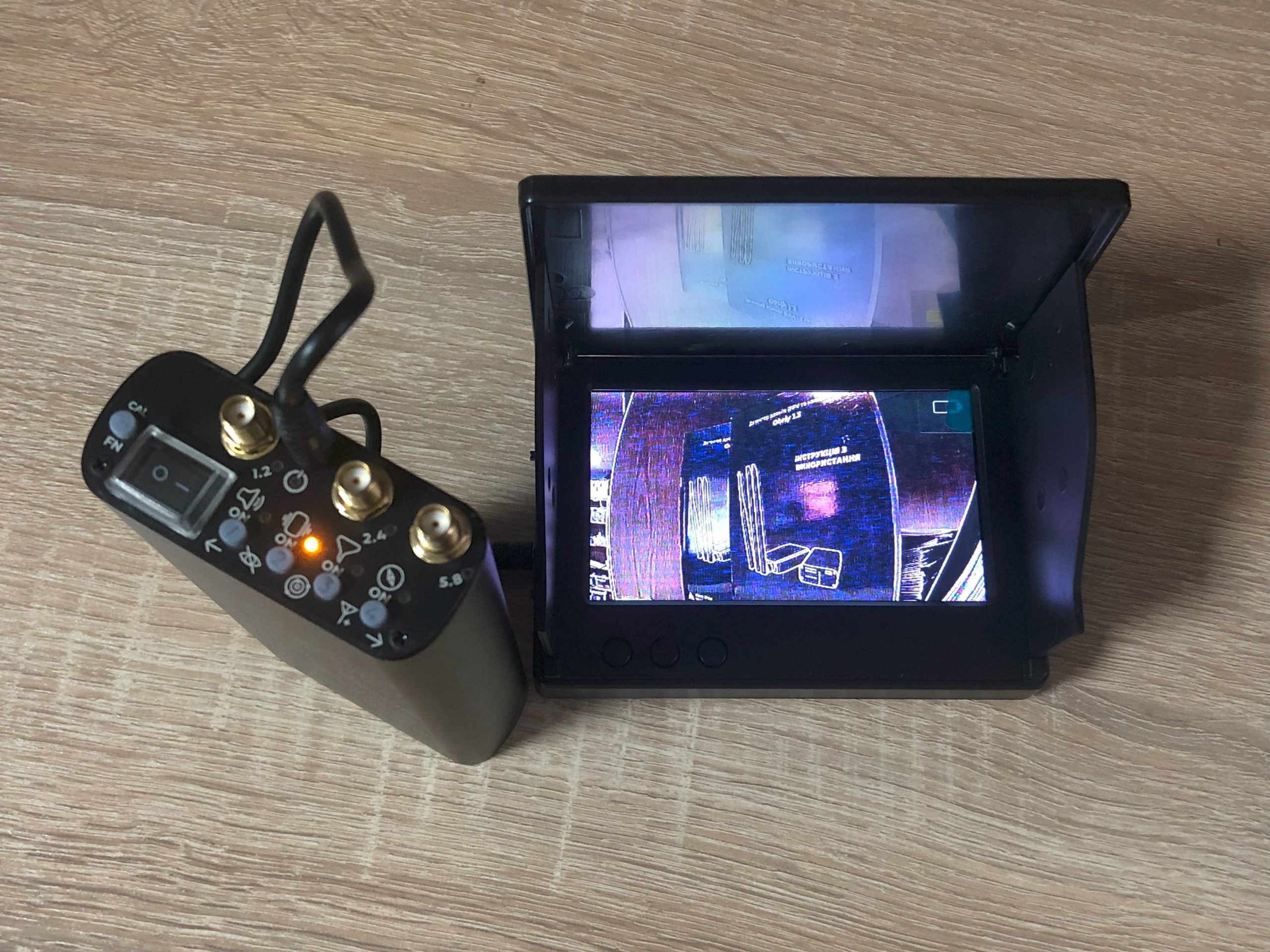
If the detector can display the drone camera’s image, it is a significant advantage. This enables the operator to see what the enemy sees, identify potential targets, and understand the operator’s route and intent. Although available in most detectors, it is still classified as an “additional criterion.”
8. Compactness
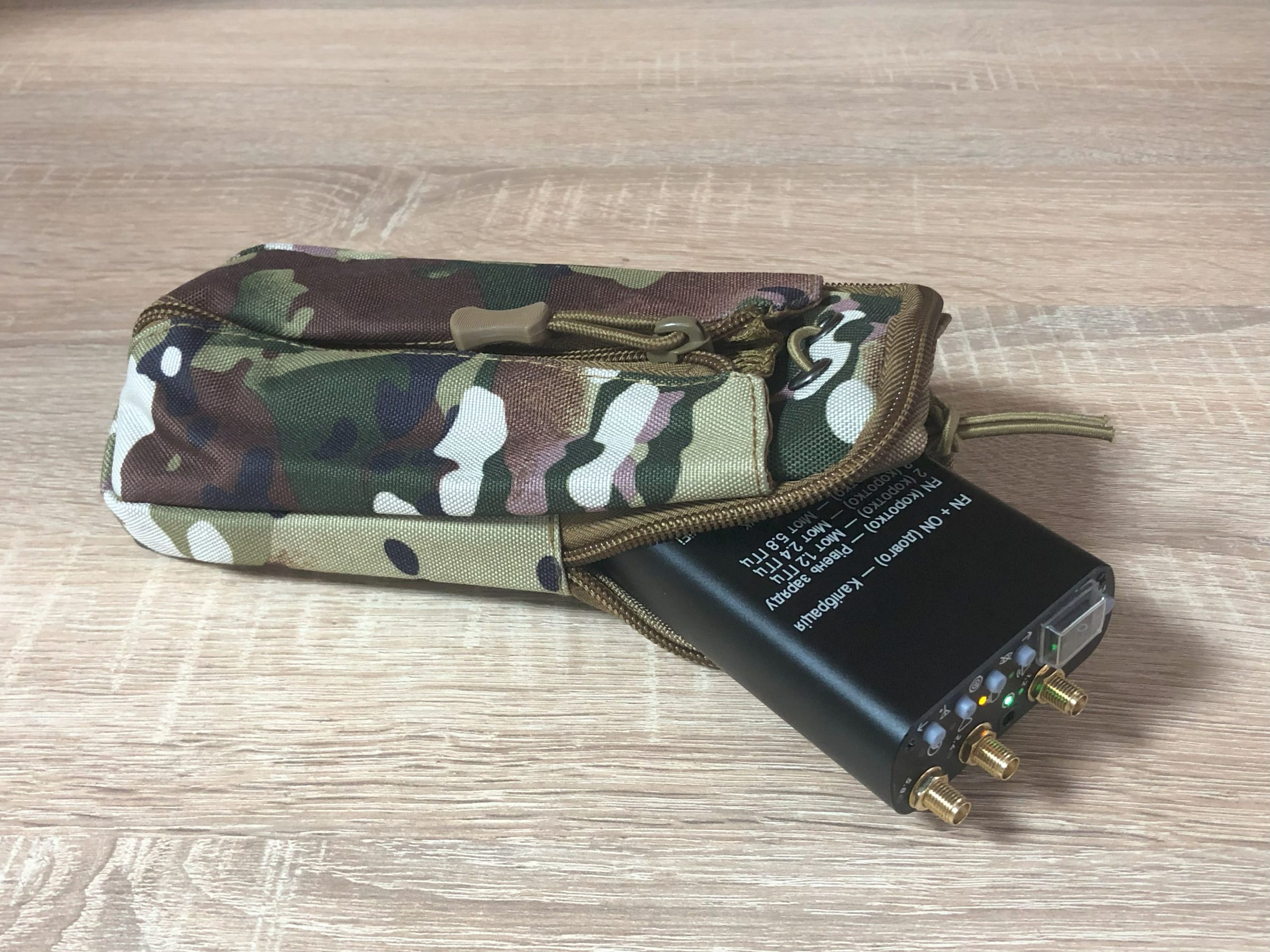
The device should be lightweight and convenient — suitable for carrying in a tactical vest or for installation in confined spaces (vehicles, shelters). A heavy or bulky device will not be carried, even with good specifications, as gear is already heavy enough.
9. Ease of use
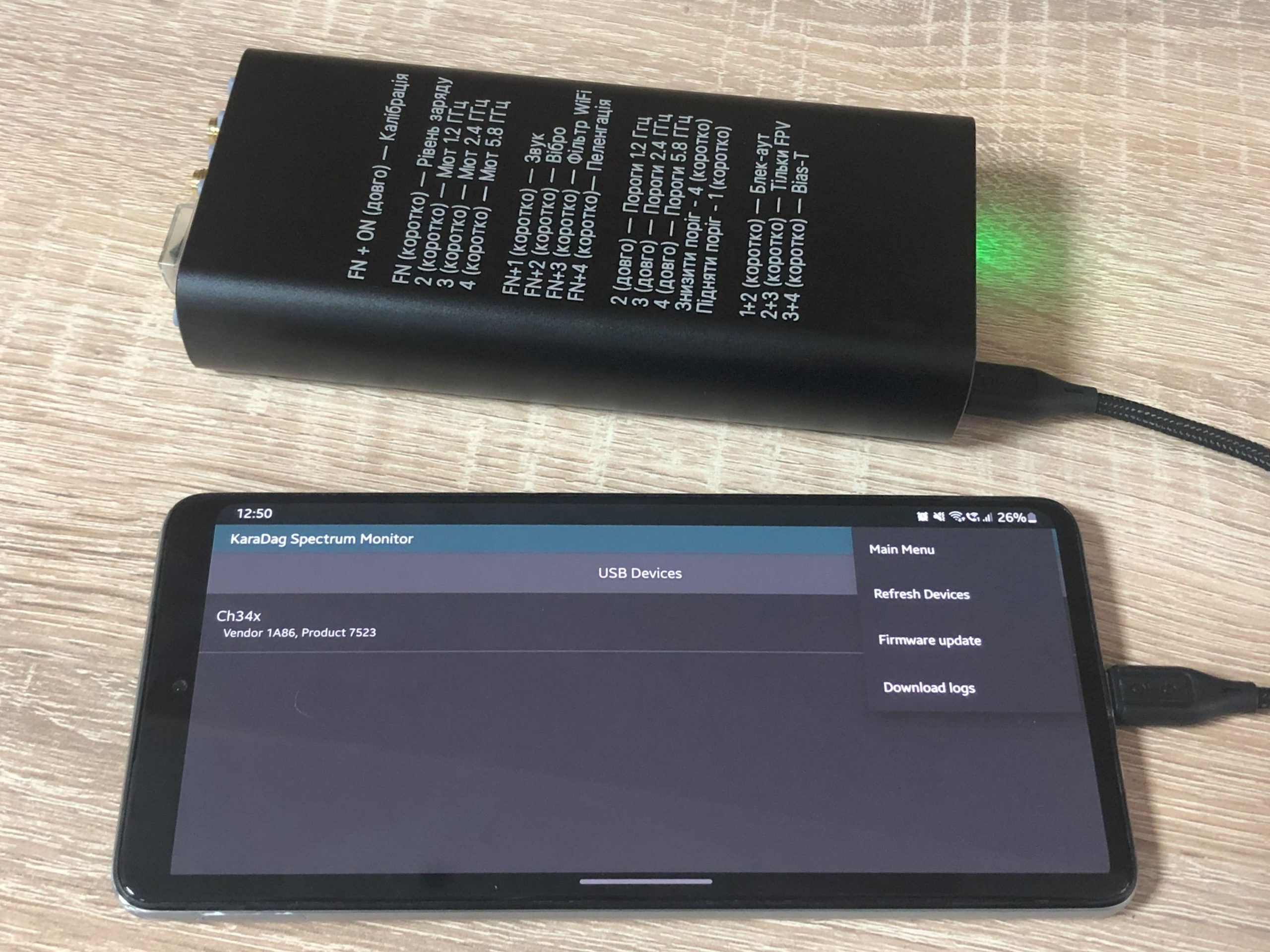
The interface should be intuitive and not require long training. Software functions (frequency switching, threshold adjustment, spectrum analysis) must be accessible even to users without technical education.
10. Mobile application
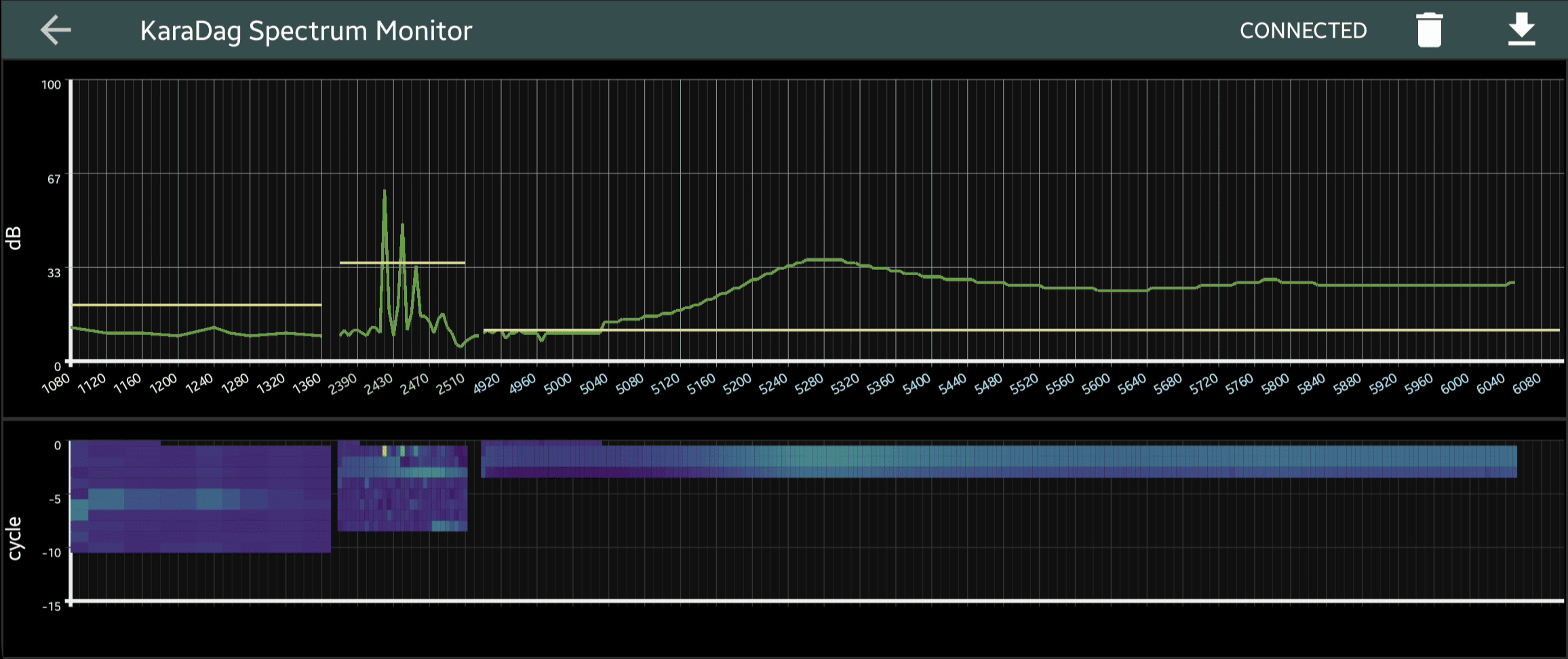
Makes it easier to configure settings, change parameters, update firmware, and graphically view the spectrum, detections, signals, and event logs. Applications often allow firmware updates or the addition of new functions.
11. System check and device passport
A system check makes it possible to verify the internal components and operation of the device before or during use, which is mandatory for safety-related equipment. The “passport” is a document containing specifications, serial number, calibration data, and recommended operating conditions, enabling the user to understand the device’s capabilities and how to operate it. It should be available from the manufacturer upon request.
12. Built-in self-diagnostics
A device damaged (for example, by EW) may behave as if operational but fail to detect drones, creating a false sense of security. Therefore, a built-in failure detection system is necessary.
Summary
Modern warfare sets new rules: new weapons demand new countermeasures. A drone detector is a lifesaving shield. Choosing one should not be driven by flashy ads or bold claims, but by real technical specifications and how the device actually works. A comprehensive approach to selecting a detector ensures you get a tool that truly provides those critical seconds, the ones that separate survival from fatal danger.
